
We talk all the time. In meetings, messages, emails, kitchens, school gates and car parks. Yet misunderstandings, avoidance, mixed messages and hurt feelings still seem to follow us everywhere. Why does communication so often miss the mark?
It’s a big question, and there isn’t one clear answer to it. But for me, part of the answer is in how and where we learn to communicate.
It’s a big question, and there isn’t one clear answer to it. But for me, part of the answer is in how and where we learn to communicate.
A Lesson in Communication I Wasn’t Ready For
Communication is a learned behaviour
We often talk about communication as though it is a natural
talent: some people are “good communicators” and others need to improve theirs.
But there is surprisingly little focus on actively learning how to communicate.
In the main, we learn to communicate from those around us. We learn what happens when someone disagrees. We learn whether it is safe to ask questions, admit mistakes, say sorry or say, “I don’t understand.” From when we are babies, we observe parents, grandparents, teachers, friends, colleagues, as well as what we see on TV and in movies, and now YouTube, TikTok and others.
Perhaps you know children who use American terms like ‘garbage’ or ‘trunk’, or perhaps their accent has an American twang, because they mostly watch US TV shows?
This is a simple example of how powerfully the world we engage in can shape the language we use and the way we use it. And if we like or value the people we are watching, or we see benefits to how they are communicating, then surely that’s a good reason to emulate them.
In the main, we learn to communicate from those around us. We learn what happens when someone disagrees. We learn whether it is safe to ask questions, admit mistakes, say sorry or say, “I don’t understand.” From when we are babies, we observe parents, grandparents, teachers, friends, colleagues, as well as what we see on TV and in movies, and now YouTube, TikTok and others.
Perhaps you know children who use American terms like ‘garbage’ or ‘trunk’, or perhaps their accent has an American twang, because they mostly watch US TV shows?
This is a simple example of how powerfully the world we engage in can shape the language we use and the way we use it. And if we like or value the people we are watching, or we see benefits to how they are communicating, then surely that’s a good reason to emulate them.
If we have good role models, that gives us a brilliant starting point. But what if we don’t?

When I was growing up, we did not really talk about things.
I am not judging my parents for that; they were not taught how to communicate
either. I can remember my grandfather in particular regularly saying that
children should be seen and not heard – and very much meaning it.
Like many people, I picked up a lot of unhelpful communication habits along the way. I learned that to be heard, you have to shout. That communication was about getting your point across, rather than understanding someone else. That conflict was negative and that you ignored it until you couldn’t any longer, and when you did, you should blow it out of proportion. That people could talk at each other rather than to each other.
Those lessons do not stay neatly at home. We take them into friendships, relationships and workplaces.
We see them when expectations are unclear and people are left guessing what good looks like. When difficult conversations are avoided until they become much bigger problems. When someone knows they have got something wrong, but does not apologise because it feels too vulnerable.
Like many people, I picked up a lot of unhelpful communication habits along the way. I learned that to be heard, you have to shout. That communication was about getting your point across, rather than understanding someone else. That conflict was negative and that you ignored it until you couldn’t any longer, and when you did, you should blow it out of proportion. That people could talk at each other rather than to each other.
Those lessons do not stay neatly at home. We take them into friendships, relationships and workplaces.
We see them when expectations are unclear and people are left guessing what good looks like. When difficult conversations are avoided until they become much bigger problems. When someone knows they have got something wrong, but does not apologise because it feels too vulnerable.
Good communication does not make every problem disappear. But it prevents a great deal of unnecessary confusion, resentment and delay.
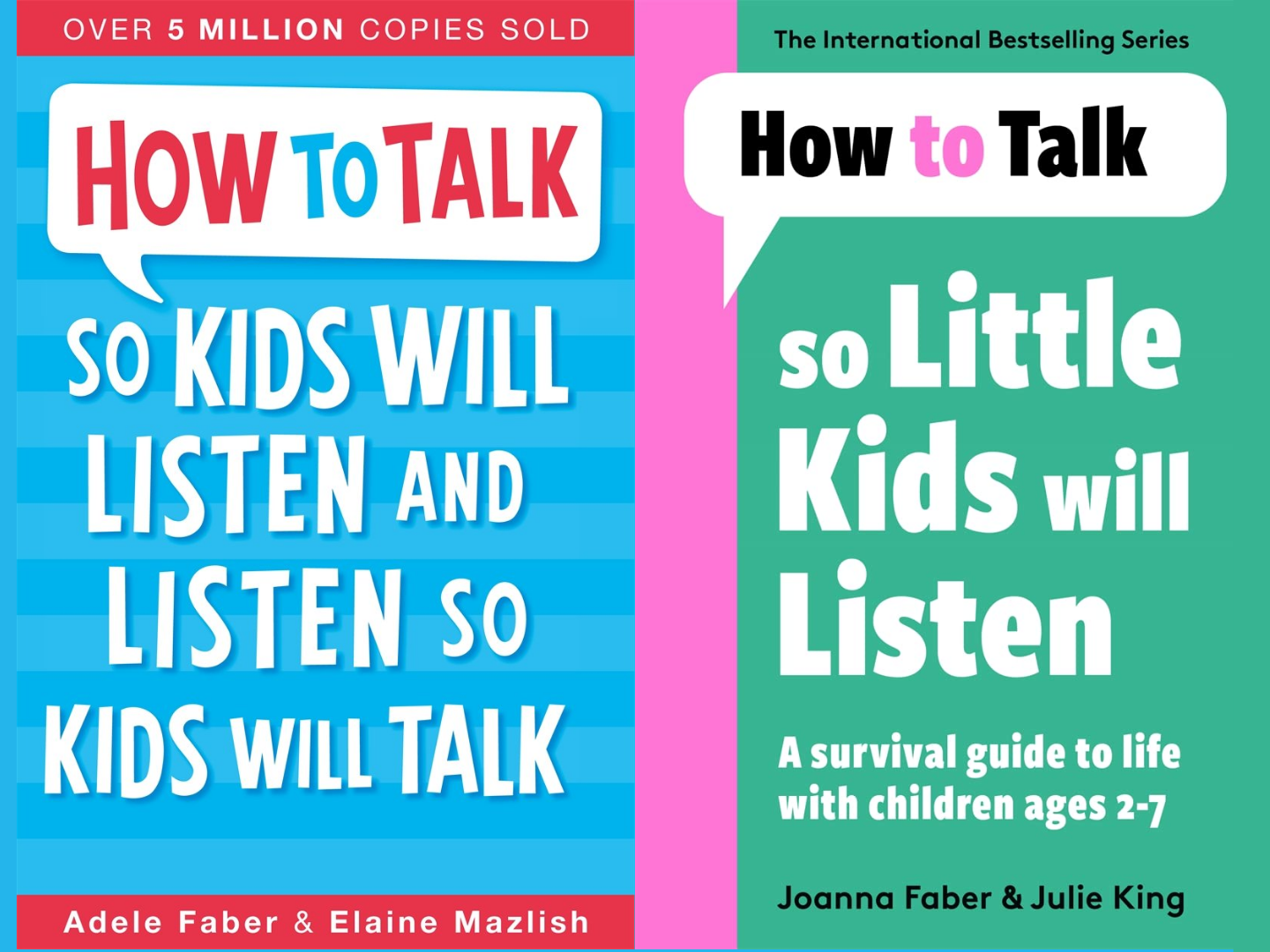
When my children were small, I read a fantastic book called How to Talk So Kids Will Listen and Listen So Kids Will Talk by Adele Faber and Elaine Mazlish. It resonated with me far beyond parenting.
At its heart, it encourages adults to acknowledge feelings rather than dismiss them; describe what is happening rather than attack the person; and problem-solve together where possible. Simple ideas, perhaps — but ones that can completely change the tone of a conversation.
“One day at a playgroup, my friend Cathy said to me, ‘Joanna, I have this book that you would love. It’s just your style. It really reminds me of the way you talk to your kids. It’s called How to Talk So Kids Will Listen & Listen So Kids Will Talk.’”
At its heart, it encourages adults to acknowledge feelings rather than dismiss them; describe what is happening rather than attack the person; and problem-solve together where possible. Simple ideas, perhaps — but ones that can completely change the tone of a conversation.
A little while later, I read How To Talk So Little Kids Will Listen by Joanna Faber and Julie King. In the introduction, Joanna — Adele Faber’s daughter — describes a friend noticing her own parenting style:
“One day at a playgroup, my friend Cathy said to me, ‘Joanna, I have this book that you would love. It’s just your style. It really reminds me of the way you talk to your kids. It’s called How to Talk So Kids Will Listen & Listen So Kids Will Talk.’”
Her friend had no idea of the connection. Yet she could see that the communication style of the book’s author — Joanna’s mother — had seeped into the way Joanna spoke to her own children. Joanna goes on to say:
“I’m not the perfect parent; I get into plenty of conflicts with my children. But I do have the skills to help get us through those conflicts, and I use them every day.”
That really stayed with me.
Her mother’s communication style had become so inherent in Joanna that other people could see it. She had learned the behaviours and tools not through a formal lesson, but through years of watching, experiencing and using them.
And that is the power of role modelling. The people around us are always teaching us how communication works.
Where and how did you learn to communicate?

The good news is that our early experiences do not have to define how we communicate forever.
I have learned from great bosses and not-so-great ones; from peers, friends and loved ones. As well as learning from my children, my husband is definitely the calmer one, and I have learned a lot from him. I also have a friend who is brilliant at opening up conversations with people, especially children. We often talk about trying to parent differently from our own upbringing — breaking the cycle, not by being perfect, but by being more intentional.
Work taught me a great deal too. Learning about coaching was pivotal. It helped me understand that listening is not waiting for your turn to speak. It is being curious enough to hear what someone is actually saying — and sometimes what they are struggling to say. I have also learned from feedback, and I’ve learned from reflecting on where I haven’t communicated well, and what I’d do differently next time.
So, what does good communication actually look like?
Good communication means being clear, respectful and honest about your perspective, while leaving room for someone else’s. It means saying the hard thing kindly. Naming an expectation rather than hoping somebody will guess it. Asking a question before making an assumption. Apologising when you need to. And when someone is communicating poorly with us, it can mean slowing things down rather than matching their energy.
It also means recognising the difference between passive, aggressive, passive-aggressive and assertive communication — and actively choosing how we want to show up.
This is something I talk about a lot in workshops and coaching. Assertive behaviour is a key skill in today’s workplace (and life in general). Look out for a future blog on those differences and how we can put ourselves more firmly in the assertive communication space.
-
 Before important conversations, take a few moments to think about what you are looking for from the interaction – write this down and keep it in mind.
 -
 If things are getting heated or complicated, suggest a break – ‘why don’t we take five minutes’ ‘let’s break for a cuppa here’, or ‘I need a few minutes to reflect on what we’ve discussed’. Creating space can help everyone involved respond more thoughtfully.
 -
 Have a few phrases in your back pocket to help you to engage best in the conversation without feeling the need to jump in and react.• “I want to understand your perspective before I respond.”• “I am finding this conversation difficult, but I think it is important.”• “Can we be clear about what we have agreed?”• “I can see how that landed. I am sorry.”
Continue the Conversation
Curious about how these ideas might apply in your organisation or practice? We'd love to connect.