What a Trip to an Island Can Teach Us About Strategy
It’s 6pm in a cottage on a beautiful island off the coast of Cornwall.
Earlier that day, members of the senior team we’d been working with had let us know that Storm Goretti was on its way. Living and working on an island means keeping a close eye on what’s coming. They were horizon scanning — quite literally — watching conditions shift, drawing on experience of previous storms, and anticipating what might happen next.
And as we sat there that evening, it struck us: this is what strategy looks like when it’s alive and functioning.
When plans meet reality
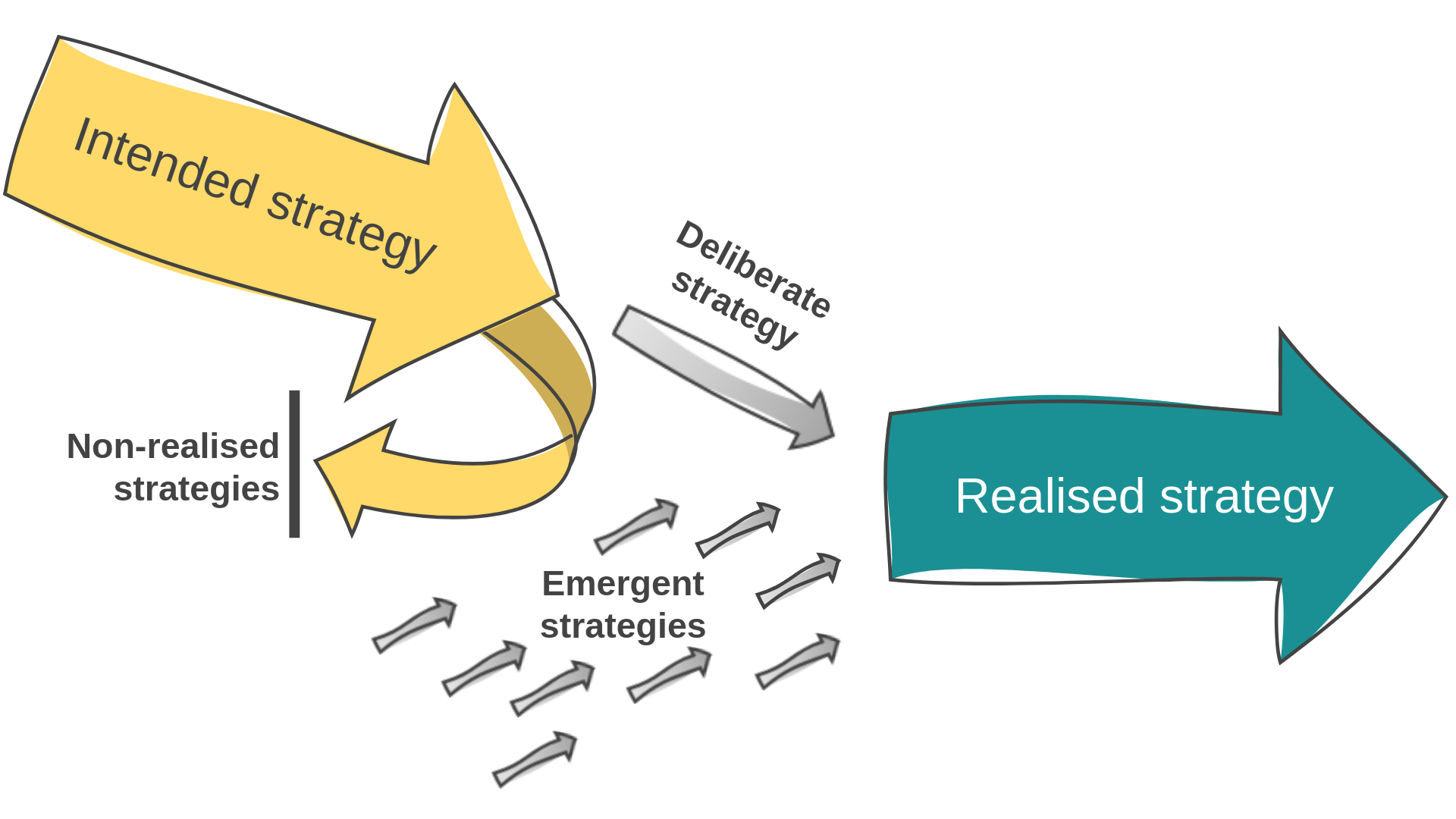
Having an intended strategy matters. It gives direction and focus. But the work of Henry Mintzberg reminds us that strategy is not only what leaders intend to do — it is also what emerges as people respond to reality. Realised strategy is shaped by learning, adaptation, and the decisions made when plans meet the world as it actually is.
The lighthouse and the route
One way we often talk about strategy is through the image of
a lighthouse.
Think of your vision - this might be your organisational
vision or an individual one – what you want to achieve.
Your vision is a lighthouse, guiding you to where you want
to be. It’s fixed. Visible. Purposeful.
Your strategy is how you intend to get there. The route you
take and the mode of transport you decide is best to get to where you need to
be.
You might plan to travel by boat — steady progress, familiar
waters. Then the weather changes. The sea becomes unsafe. Suddenly, the only
sensible option is to take to land. When you travel by car then you might reach
a diversion, or fork in the road where both paths might lead to the lighthouse
via a different scenic route.
Whatever happens, the destination hasn’t changed. The
lighthouse hasn’t moved. But the path — and even the mode of travel — has to
adapt.
Strong strategy doesn’t insist on one route. It holds direction firmly while allowing flexibility in how that direction is reached.

Back to the Island
Overnight, Storm Goretti battered the island and surrounding areas. Travel was disrupted. Systems failed. There was damage to buildings, landscape and equipment. By morning, one of the shop freezers hadn’t survived the outage, leaving food with nowhere to store it and at risk of being wasted. So, someone arranged to cook it, and encouraged staff to enjoy a hot breakfast as they all worked together to get everything back to normal.
There was no drama. No blame. Just clear prioritisation, practical problem-solving, and people pulling together to do what needed doing.
As we watched all this going on, few things stood out powerfully:
- A clear overarching mission: delivering an exceptional guest experience while taking great care of staff
- Values that genuinely guide decisions under pressure
- Strong prioritisation — people know what matters most in the moment
- A culture of looking after one another
Everyone we encountered checked that we were safe and comfortable after the storm. At the same time, people were busy restoring roads, buildings, and equipment — quietly getting things back to normal.
It was a powerful reminder that when strategy is lived — not laminated — it creates resilience, connection, and trust.
What we have learned from our Tresco Partners
Spending time with a team who live with uncertainty as part of everyday life has quietly increased our own capacity to roll with the punches. We now find ourselves expecting disruption at some point — and planning for it as a matter of course.
So we packed spare clothes. We checked where we might stay if travel was disrupted. As storm updates came through across the week, we felt fine about it. Prepared. Ready to adapt. When we couldn’t get home on the train, it didn’t phase us. There was no frustration or panic — just a quick sense-check, a new plan, and a calm decision to stay overnight and catch an early train home.
No stress. No drama. Just adjustment.
It felt like a small but meaningful moment of realised strategy — learning absorbed through experience rather than instruction. Being around people who are comfortable with uncertainty, who trust themselves and one another to respond well, builds that same capability in you.
We may not be islanders — but we are certainly getting better at riding the waves of uncertainty.
Who we are
hello@leaderfulaction.com
Featured links
Connect with us
Action Learning
Group Coaching
Coaching Supervision
Executive Coaching
Developmental Coaching
and move forward.
Workshops on Change
Examples of change workshops include:
Understanding Change
Workshops on Coaching
Examples of coaching workshops include:
The Coaching Approach
Coaching skills for Managers
Building on your Coaching Skillset
Developing a Coaching Culture
Workshops on Communication
Examples of communication workshops include:
Communicating Effectively
Communicate with Impact and Influence
Having Courageous Conversations
Presentation Skills
Workshops on Collaboration
Cohesive Teams
Creating Collaborative Team Practices
Building Psychological Safety
Workshops on Effectiveness
Examples of Effectiveness workshops include:
Delegation
Giving and Receiving Feedback
Prioritisation and Time Management
Effective Team Meetings
Workshops on Impact
Outcomes and Results
Project Management
Impactful Learning and Development
Workshops on Leadership
Leadership Styles
Leading in an Agile Environment
Workshops on Management
cultivate a thriving team culture.
Developing Collaborative and Accountable Teams
Leading a Hybrid / Remote Team
Having Courageous Conversations
Workshops on Resilience
Supporting the Wellbeing of Others
Unmasking your Imposter
Workshops on
Self-awareness
Emotional Intelligence
Working with your Values
Workshops on
Strategy
Bringing Strategy into Reality
Aligning Strategy and Culture
Workshops on
Teamworking
Effective and Cohesive Teams
Working in a Hybrid Environment
Dave Tosh
Dave has over 40 years working experience in the public sector, private sector and the armed forces and recently retired as Director of Resources for the Welsh Parliament (Senedd). In 2022, Dave became a recipient of an OBE for Parliamentary and Public Service.
Qualifications:
- ilm Level 7 Certificate in Coaching & Mentoring
- Licensed to practice with Insights Discovery®
Natalie Savery
Qualifications:
- ilm Level 7 Strategic Leadership & Management
- ilm Level 7 Executive Coaching and Mentoring
- CIPD Level 7 Strategic Learning and Development
- ilm Action Learning Facilitation
- EQ-i 2.0 Emotional Intelligence Psychometric Practitioner
- Level 3 Internal Verification of Credit Based Learning
- Level 3 Certificate in Assessing Candidates in the Workplace
- Working towards Level 3 Digital Learning Practitioner qualification
Professional Bodies
- Chartered Member of The Chartered Institute of Personnel & Development (CIPD)
- Fellow of The Learning & Performance Institute (LPI)
- Master Coach with European Mentoring & Coaching Council (EMCC)
- Member of the Institute of Leadership (IoL)
- Member of the Chartered Management Institute (CMI)
Allison Holland
A trusted partner, coach and facilitator, she balances challenge with support, believing that when leaders come together with shared purpose and values, great things can happen. Passionate about developing the next generation of leaders – especially women – Allison brings knowledge, insight and a collaborative approach to every organisation she works with.
Qualifications & Professional Memberships:
- ilm level 7 Executive Coaching and Leadership Mentoring
- MSc in Management and Leadership in Public Service
- PGCE in Adult Education
- Post Graduate Certificate in Leadership and
Management (CMI Level 7)
- Systematic Team Coach
- Qualified practitioner of Insights Discovery
- Trained to use ACT for Psychological Flexibility
- Accredited to administer and coach using EQi-2.0
(Emotional Intelligence) and MTQ48 (resilience)
- Tutor, assessor and supervisor for ilm qualifications in
coaching and leadership and management - level 5
and 7
- Member of the European Mentoring and Coaching
Council
Dawn Smart
She is also a qualified executive coach, adept at turning her hand to developing individuals as well as groups. Dawn has been a key part of our team since 2017, working with Leaderful Action on large scales, long term projects. Dawn is so committed to delivering for our clients and so involved in what we do, that we often forget that she isn’t a full-time member of our team.
Qualifications & Professional Memberships:
- ILM Level 7 Executive Coaching and Mentoring
- Working with and Coaching Neurodivergent clients
- Postgraduate Diploma in HRM
Helen Whitney
Qualifications & Professional Memberships:
- Senior Practitioner Accreditation with the European Mentoring and Coaching Council (EMCC - EIA)
- ilm Level 7 Diploma in Leadership Mentoring & Executive Coaching
- Post Graduate Certificate in Sustainability and Social Behaviour Change
- MSc Occupational Psychology
- Qualified (BPS Level A and B) to use wide range of psychometric instruments including WAVE and the EQi 2.0 (measure of emotional intelligence)
- Qualified facilitator of the Strength Deployment Inventory (SDI) conflict management/prevention tool
Bethan Emanuel
Her adaptability applies to languages as well – she is bi-lingual in Welsh and English and can facilitate or coach in either. She may be flexible but she’s not afraid to call a spade a spade and her honesty is appreciated by us and her learners alike. Bethan is committed to a long and prosperous career in learning and development and has an enviable CPD record to prove it. We look forward to sharing the journey with her for many more years to come.
Qualifications & Professional Memberships:
- ILM Level 7 Diploma in Executive Coaching and Mentoring (USW)
- MA Strategic Human Resources Management (Liverpool John Moores)
- Chartered Fellow of CIPD
- Member of the Association for Coaching (AC)
Manjula Bray
Qualifications & Professional Memberships:
- Certified On Line Facilitator
- ILM Level 7 certificate in executive coaching and leadership mentoring
- MSc in Entrepreneurship
- Postgraduate diploma in Human Resource Management
- BSc Applied Psychology (2i)
- BPS Level B+ certified in a range of occupational assessments, including MBTI, 16PF(5), NEO PI-R, OPQ32, WAVE, MTQ48, EIP, aptitude tests, and 'Implicitly' (unconscious bias).
- Member of Special Group for Coaching Psychology
- Fellow of CIPD
Sian Roberts
Outside of her working life, Sian is passionate about food. She can be found cooking up a storm trying new recipes in her kitchen or out in nature foraging for ingredients. She also enjoys lifting weights and spending time with feline friends.
Qualifications:
- ILM Level 5 in Leadership and Management
- ILM Level 3 in Life Coaching
- Action Learning Facilitator
- BSc (Hons) Psychology
- MA in Consultative Supervision and Cognitive Behavioural Therapy
- NVQ Level 3 in Health and Social Care Work Based Assessor
Nina Goldsworthy-Griffiths
Qualifications:
- BA(Hons) in Training and Educations
- Certificate in Education(PGCE)
- Insights Discovery Practitioner
- Coaching level 5
- Business and Finance HND/HNC
- Customer Service NVQ level three
- Brain Friendly Learning course
- Basic Skills 9282
- Assessor and Verifier awards
Marcus David
Qualifications & Professional Memberships:
- Post Graduate Diploma in Human Resource Management
- Postgraduate Certificate in Education (PGCE (PCET)
- HND Business and Finance
- NLP Business Practitioner
- A1 & V1 Assessor Awards
- Chartered member of the CIPD (MCIPD)
- CIPD Tutor and Internal Verifier for Weston College & SGS College
Leema Sabir
Ian Diment
Qualifications & Professional Memberships:
- Post Graduate Diploma in HR Management
- BA (Hons) Degree in Town Planning
- ILM Level 7 Diploma in Executive Coaching and Mentoring (qualification pending)
- Chartered member of the Chartered Institute of Personnel and Development (CIPD)
Andrea Street OBE
Qualifications & Professional Memberships:
- ILM Level 7 Certificate in Executive Coaching and Mentoring
- Qualified Coach - Executive Coaching and Mentoring provided for NHS, Local Government and Welsh Government as part of my one public service role
- Member of Association for Coaching, Academi Wales Coaching Network and All Wales Coaching Alliance.
We're working hard behind the scenes to develop this section where you will be able to access our online learning resources.
In the meantime you can contact us by using the the 'Get in touch' button on the homepage or by emailing hello@leaderfulaction.com
Introduction to Insights
Team Effectiveness with Insights
This workshop can cover:
Improving Team Effectiveness with Insights
We assess individual and team preferences for communication and keeping in touch. We also look outwards from the team – who are our stakeholders and customers, how do and should we communicate with them to improve relationships.
Team Resilience with Insights
We discuss indicators and signs that could indicate resilience issues and agree individual and collective actions to develop resilience
Marie Talmage
Qualifications:
- HNC Business Studies – University of South Wales (Modules: Contract Law, Marketing, Digital Marketing, Management Accounts, HR, Economics).
- ILM Level 3 Leadership & Management.
- National Qualification in Photography – Level 5.
- ECDL Level 2.
- RSA Communications in Business.
- Extensive CPD including: Data Protection, CBT Skills, Stress Management, Safeguarding Adults & Children, Train the Trainer, Social Media in the Workplace, and Wellbeing at Work.
Ceri Smith
Qualifications:
- MSc Human Resource Management
- CIPD Level 7 People Management and Development
- CIPD Level 7 Employment Law
- D32/D33 City & Guilds Assessor Award
- City & Guilds Adult Education Teachers Certificate
Professional Bodies
- Chartered Member of The Chartered Institute of Personnel & Development (CIPD)
Cassie Austin
Qualifications:
- Level 4 Preparing for Leadership and Management in Health and Social Care
- Designated Safeguarding Officer (Level 3)
- STA Level 3 Emergency First Aid at Work
- BA(Hons) Animation
Daljit Morris
Qualifications:
- ILM Level 7 – Diploma in Management
- ILM Level 3 – First Line Management
- BA Applied Social Studies
Ian Bancroft
Qualifications & Professional Memberships:
- MSC Local Governance (Birmingham University)
- BA (Jt Hons) English / Physical
Education and Sports Science (Loughborough University)
- DMS Management Studies (University of North
London)
- ILM Level 7 Course
in Executive Coaching and Mentoring
- Chief Executive Wrexham County
Borough Council 2018-24
Phil Savery
Roles within the retail, housing and charity sectors have allowed him to develop vital skills in customer service, project management, communications, and digital design.
Phil has created apps, games, and websites, and taught digital skills, including ECDL, to a variety of learners. He is currently working towards an ilm Level 7 in Leadership and Management.
Qualifications
- Level 3 Award in Education and Training
- BA (Hons) Computer Games Design
- NVQ Level 3 in Customer Service
- NVQ Level 2 in Retail
Supporting a business through growth and change
A private-sector business wanted to build on the progress it had already made, while creating greater consistency in how leaders and managers worked together. Senior leaders and line managers were navigating operational pressures, changing priorities and the need for stronger collaboration across departments.
Helping a strong team work with greater intention
A well-established team had strong relationships, humour and camaraderie. However, their familiarity with one another sometimes meant that boundaries became too flexible, and there was an opportunity to be more intentional about the impact of everyday behaviours, conversations and interactions on the wider team culture.
We facilitated a tailored team-development session, using Insights colour profiles and structured discussion to explore what helps people feel included, respected and able to work well together. The team considered individual responsibility, agreed the behaviours they wanted to strengthen and identified practical ways to keep these conversations active in team meetings.
Participants left with a clearer sense of how they could support one another while maintaining positive, appropriate boundaries. Their understanding of how to cultivate a positive workplace culture increased from 4.6 to 5.6 out of 6.
Rebuilding trust in a newly combined team
Following a tender process, two services from different organisations were brought together to form a new team. The transition was particularly difficult for colleagues moving into a new organisation, and the two groups had previously been in competition. There was a significant history to work through, alongside understandable uncertainty and distrust.
We designed and facilitated a series of team-development sessions to create a safe, structured space for colleagues to get to know one another, discuss what they needed from the new team and begin building shared purpose. Activities and facilitated conversations supported trust, psychological safety, communication and agreement on priorities and ways of working.
The sessions helped the team begin moving from separate groups towards a more connected service. All post-session respondents rated the opportunity to connect with their team at 6 out of 6, and the overall session was rated 5.8 out of 6.